

AI is becoming easier for businesses to access and use. Work that once required more technical knowledge, specialized resources, or larger teams can now be supported by tools for research, development, analysis, documentation, and automation. However, having access to more capability does not automatically make a business more effective. As AI becomes easier to adopt, I think the more difficult question is deciding where it can create enough value to justify its use.

That question stayed with me throughout Echelon Philippines 2026. Our Structure Efficiency team attended discussions, product showcases, and conversations with startups, but what stood out to me was not the newest model or the number of places where AI could be introduced. I became more interested in what should actually improve, where people can gain meaningful leverage, and whether the problem being solved is important enough to justify the investment.
AI Without a Measurable Outcome Is Just Another Cost
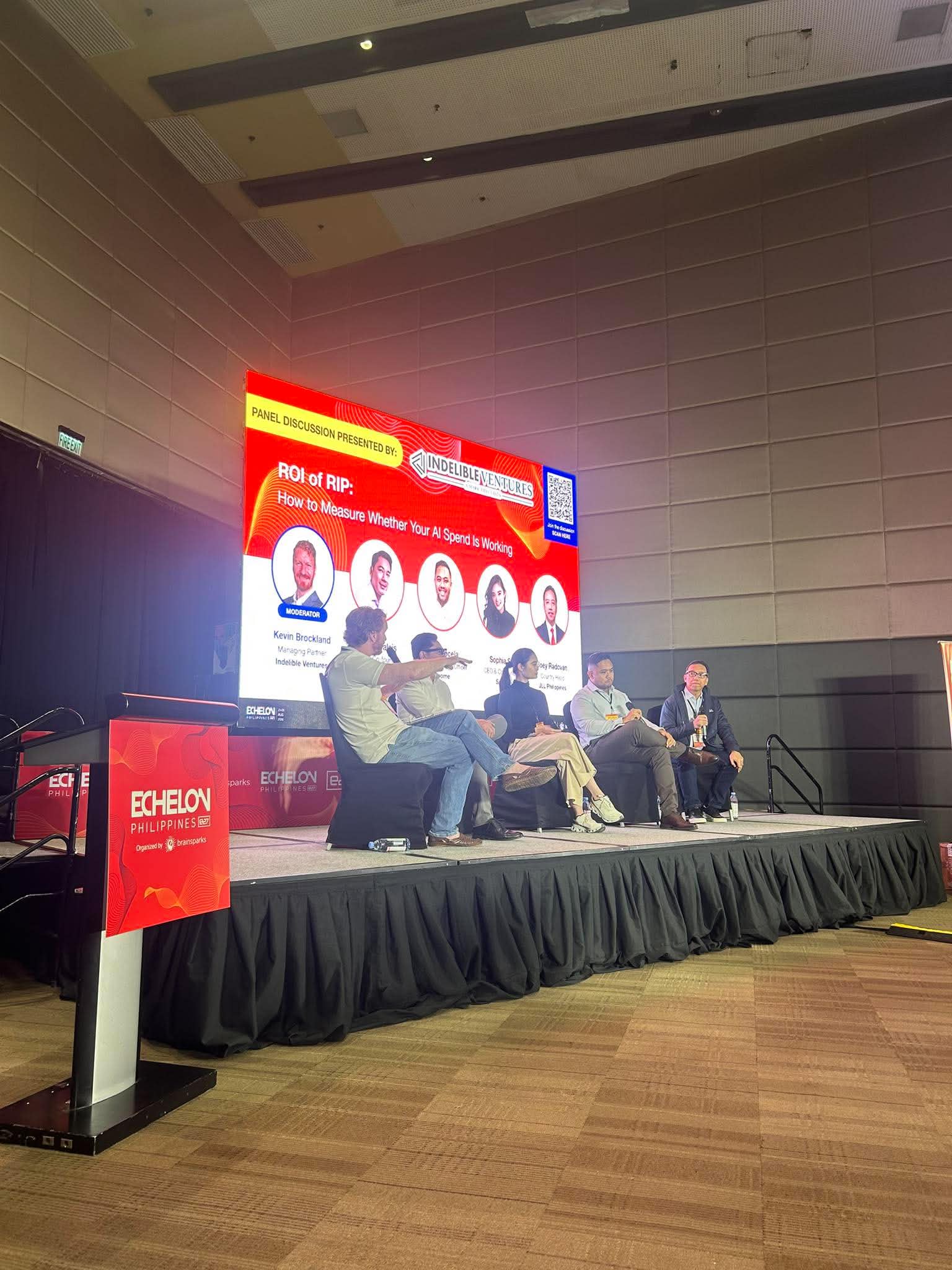
An AI system can work exactly as intended without creating meaningful business value. Automating a task is not the same as improving the business because the result still needs to show up in an outcome that matters. That could be higher revenue, lower cost, faster turnaround time, better customer service, greater team capacity, fewer errors, or stronger decision-making. One of the discussions I attended at Echelon reinforced the idea that AI ROI does not have to come from reducing headcount. It can also come from helping an existing team handle more work, improving customer responsiveness, producing better analysis, or giving people better information to work with.
The expected result should therefore be clear before the technology is introduced. If AI is being used in customer service, a business might measure response time, resolution rate, or customer satisfaction. If it is being introduced into an internal process, the measure could be hours saved or fewer manual steps. Cost belongs in the same calculation because an inexpensive experiment can become much more expensive as usage, data processing, and token consumption increase. Monitoring those costs helps a business determine whether the value being created still justifies what the system costs to operate.
For me, the lesson was clear: the metric should come before the model. A business first needs to define what it wants to improve and how that improvement will be measured. Once that is established, it can make a more informed decision about which technology fits the problem and whether scaling it makes business sense.
The metric should come before the model.

The Real Opportunity Is Leverage, Not Headcount Reduction
Another idea that stood out to me was that AI does not have to create value by replacing people. In many cases, the stronger opportunity is allowing people to spend more time on work where their judgment, expertise, or relationships matter most. A salesperson creates more value by speaking with qualified prospects than by repeatedly formatting notes, while a consultant contributes more by solving a client's problem than by manually reorganizing information. For a founder, the same principle may mean spending more time understanding customers and making decisions instead of handling every supporting task alone.
Bryl Lim's experience with Tarsi, a budget and expense-tracking application, showed another form of this leverage. Rather than trying to build a complete product before anyone used it, he released a simpler version and allowed real users to influence what came next. Their feedback helped shape the product, while the community that formed around it created opportunities for discussion, feature suggestions, and referrals. What I found useful about this example was that the value did not come only from being able to build quickly. It also came from staying close to users and allowing their feedback to guide what should be improved next.
This changed how I thought about AI in a business setting. Instead of focusing only on which tasks or roles could be removed, it can be more useful to identify the supporting work that takes people away from higher-value responsibilities. AI creates stronger leverage when it gives people more time to focus on customers, decisions, relationships, and other work that contributes more directly to business results.
Faster Building Makes Customer Validation More Important
AI has also made it easier to move from an idea to something that works. During a founder-focused session at Echelon, I saw how tools such as Codex can support planning, development, and faster iteration. Lowering the technical barrier to testing an idea creates useful opportunities, but it also makes it easier for a team to spend time and effort on a product that has not been properly validated.
This became clear when one participant discussed a manufacturing-related product idea and asked how to find potential customers. The recommendation was not to continue adding features or make the product more complete first. Instead, the advice was to speak directly with potential customers and determine whether the problem was important enough for them to solve. In that situation, the main uncertainty was not whether the technology could be built, but whether there was enough customer demand to justify building it further.
That example stayed with me because faster development can easily be mistaken for progress. AI can reduce the time required to execute an idea, but it cannot determine whether customers care enough about the problem to change how they work or pay for a solution. For founders and product teams, the ability to build faster should make it possible to test assumptions earlier, speak with users sooner, and focus development on problems that already show signs of real demand. Speed creates value when it helps a team reach a useful solution sooner, not when it simply allows the team to produce more quickly.
Start With the Problem, Not the Technology
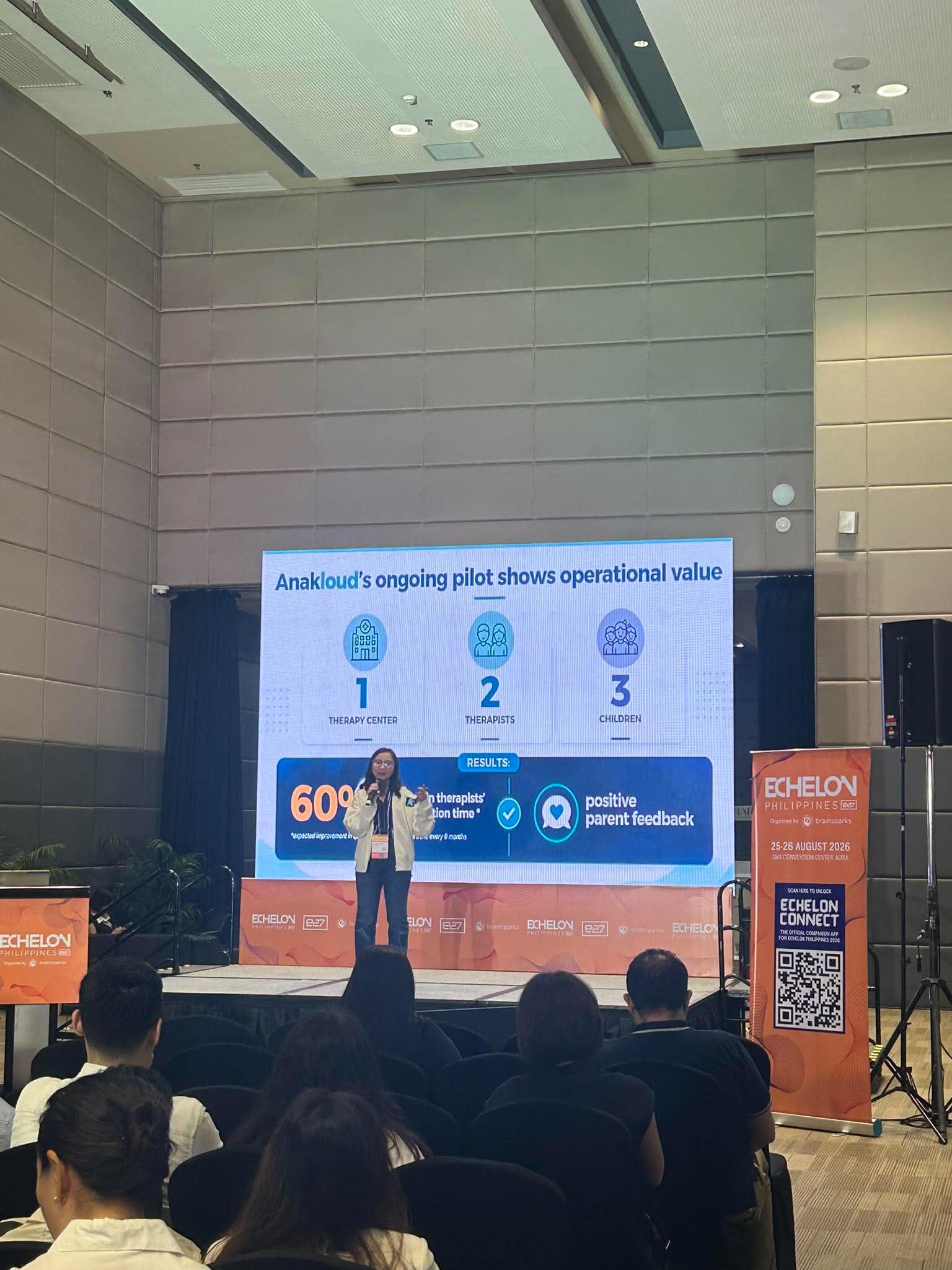
The same pattern appeared in the products and companies we encountered beyond the talks. Our team spoke with Apper CloudLabs, BetterClinic, and DashO, and attended a product showcase by Noophora. Although their products addressed different industries and needs, I found it easier to understand their potential value when I focused on one question: what problem is this actually solving?
BetterClinic was one of the clearest examples. Its focus on medical documentation addresses an administrative burden surrounding healthcare delivery. The potential value does not come simply from using AI to generate documentation. It comes from reducing the amount of time spent on administrative work so healthcare professionals can focus more on responsibilities that require their expertise and direct involvement.
What I took from this was that a slow or inefficient process does not automatically need AI. The underlying problem may be unclear ownership, poor data, unnecessary process steps, or software that is already too complicated. Starting with the problem makes it easier to determine whether AI can remove a genuine constraint or whether adding another technology would simply make the existing process more complex.


The Real Challenge Is Knowing Where AI Belongs
What I observed at Echelon reinforced my view that AI can create value in several ways. It can increase the capacity of an existing team, reduce administrative work, accelerate product development, or make useful capabilities more accessible to smaller organizations. However, those outcomes do not happen simply because AI has been introduced. A business still needs to identify the right problem, understand what improvement should look like, and determine whether the result is worth the cost and complexity of the technology being used.
Knowing how to use AI is only part of the challenge. The more difficult skill is knowing where it belongs and where it can make a meaningful difference. That was the clearest lesson I took from Echelon Philippines 2026. AI becomes valuable when it is applied to a real problem, produces a result worth measuring, and helps a business use its people and resources more effectively.